TL;DR: Complete beginner? Use it, no debate. Already past the basics? Look elsewhere.
4/5
Great for beginners, weaker after 50 hours
The short version
I've spent real time with Duolingo's Spanish course, not a weekend, real months of daily lessons stacked on top of each other. My take is this: it's a fantastic front door into Spanish, and a pretty mediocre place to live long term. If you're just starting out, use it, lean on it hard, let it build the habit for you. Once you've put in around fifty hours though, it starts giving you less and less for your time, and you need to bring in other tools or you'll plateau without noticing.
My current Spanish score inside the app sits at 19, which Duolingo tells me means I can "introduce myself." Cute milestone, sure, but it also tells you something honest about how the app measures progress: in tiny, gamified chunks that feel great in the moment and mean less than you'd hope in the long run.
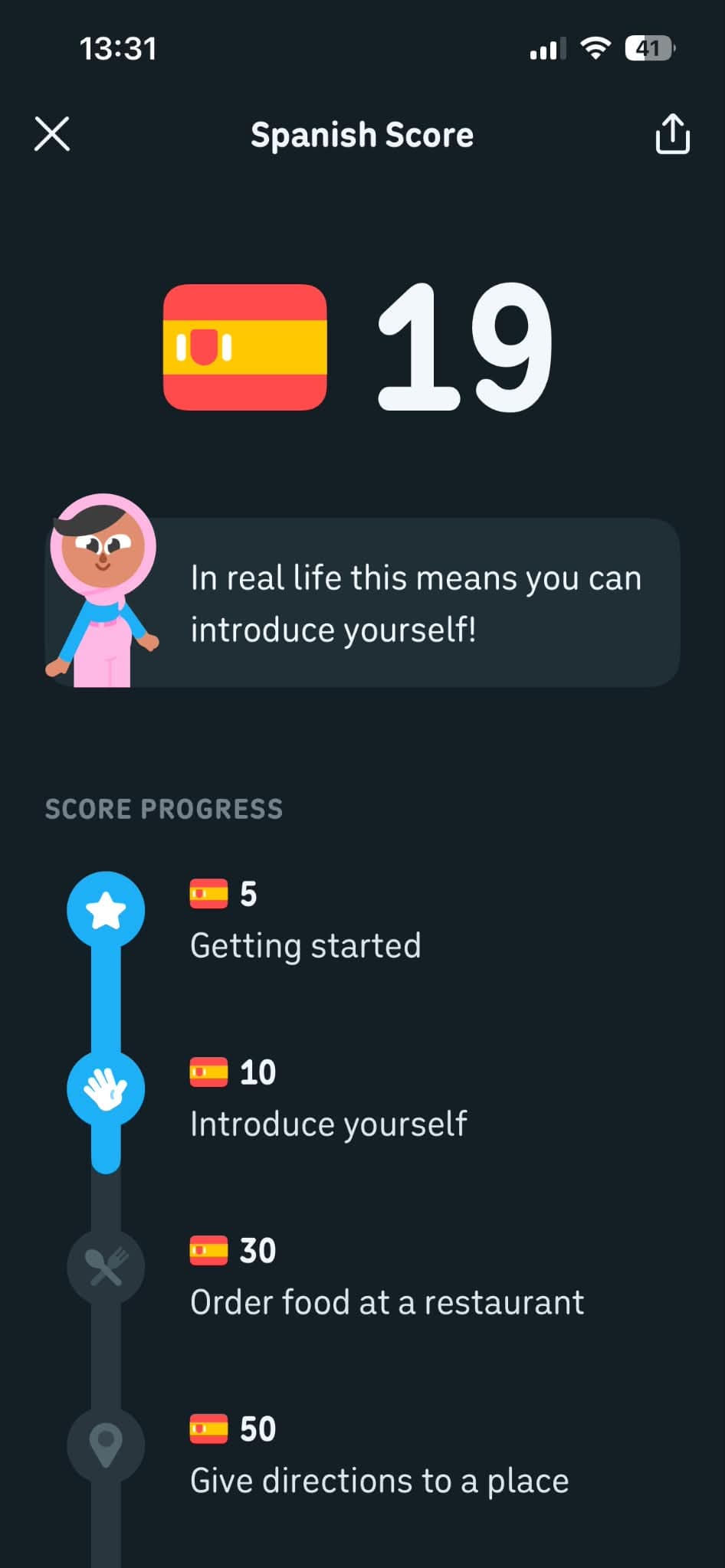
This is what that milestone screen looks like in practice. A flag, a big number, and a friendly cartoon character telling you exactly what you've supposedly unlocked in the real world. It's a nice touch, I'll admit, the kind of small dopamine hit that keeps you coming back for the next lesson without you even noticing you're being nudged. Just don't mistake it for fluency, because that's where it gets misleading. Nineteen points in, the app told me I could introduce myself in Spanish. Technically true. I still could not order a coffee without pointing helplessly at the menu and hoping the barista took pity on me. The score is a nice motivator. It is not a real measure of how much Spanish you've gained, ironically enough, given how hard it wants you to believe otherwise.
How Duolingo teaches Spanish
The whole course is built around a skill tree. You move through sections and units, each one built on the last, and each unit is a string of bite-size lessons: matching exercises, fill in the blank, listen and type what you hear, that sort of thing. It leans heavily on spaced repetition, so words and structures you learned three units ago quietly reappear later to make sure they stick for good.
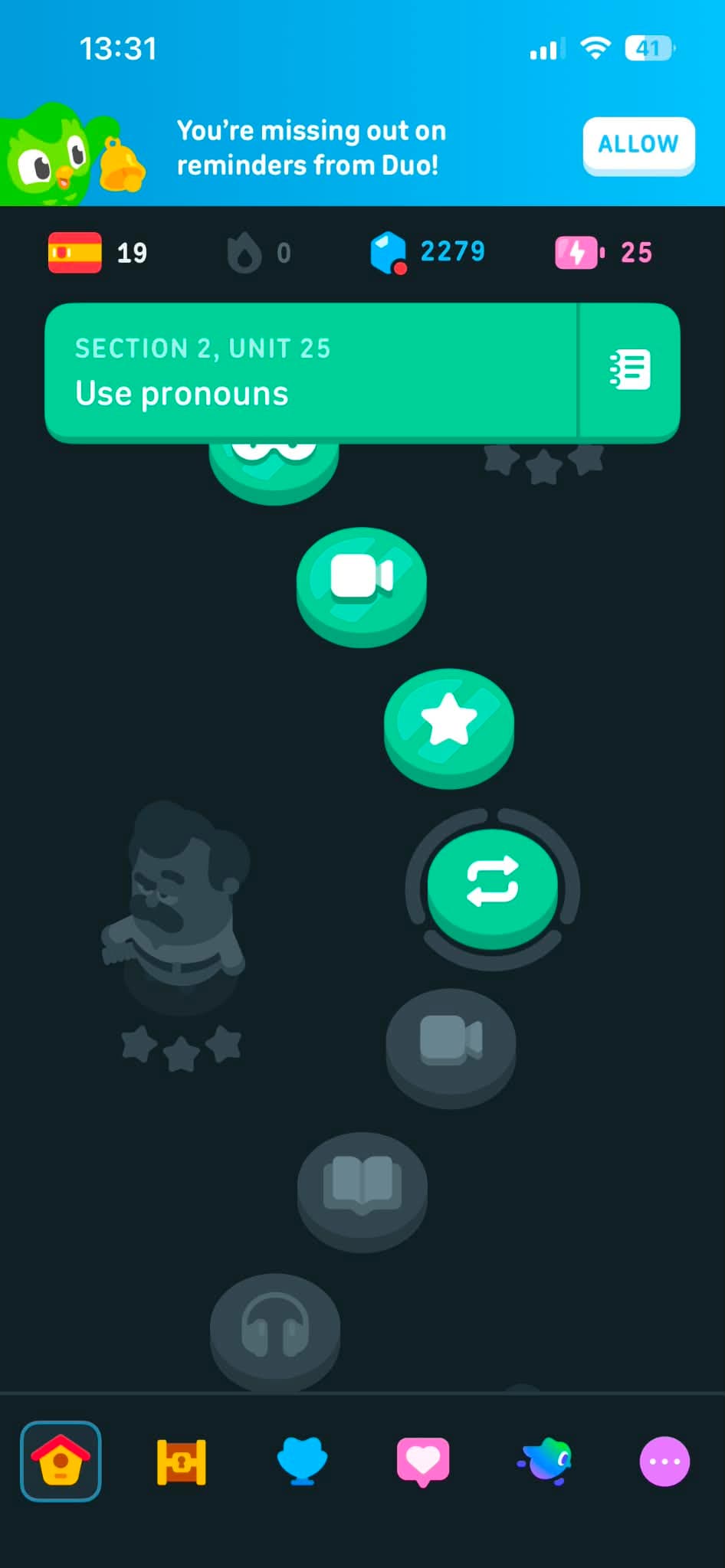
It works. I won't pretend it doesn't. The bite-size format means you can knock out a lesson while waiting for coffee or standing at a bus stop, and the spaced repetition really does help things stick better than the cramming I did for language classes back in school. This is the exact screen I'm looking at most days, the skill tree with its little icons for practice, listening, and short stories, each one nudging you forward without asking too much of you at once. The unit I'm on right now is about pronouns, and I can already feel some of it becoming automatic instead of something I have to stop and think through every single time, which is exactly the kind of small, quiet progress this app is best at producing.
What it doesn't really teach you, at least not on its own, is how to hold a real conversation. You'll recognize a lot of words. You'll be able to translate sentences in your head. But there's a real gap between that and opening your mouth in front of a real Spanish speaker and having something useful come out. More on that gap later, because it matters a lot for how you should use this app.
Streaks, quests, and leagues
Duolingo is, underneath the language lessons, a surprisingly well built game. There are daily quests, streak counters, gems, leagues you get placed into with other learners, and a friends system so you can compare progress with people you know. It's effective. Almost suspiciously effective. I'll be honest, my own streak is sitting at exactly zero days right now, which should tell you something about how I feel about being chained to a daily counter.
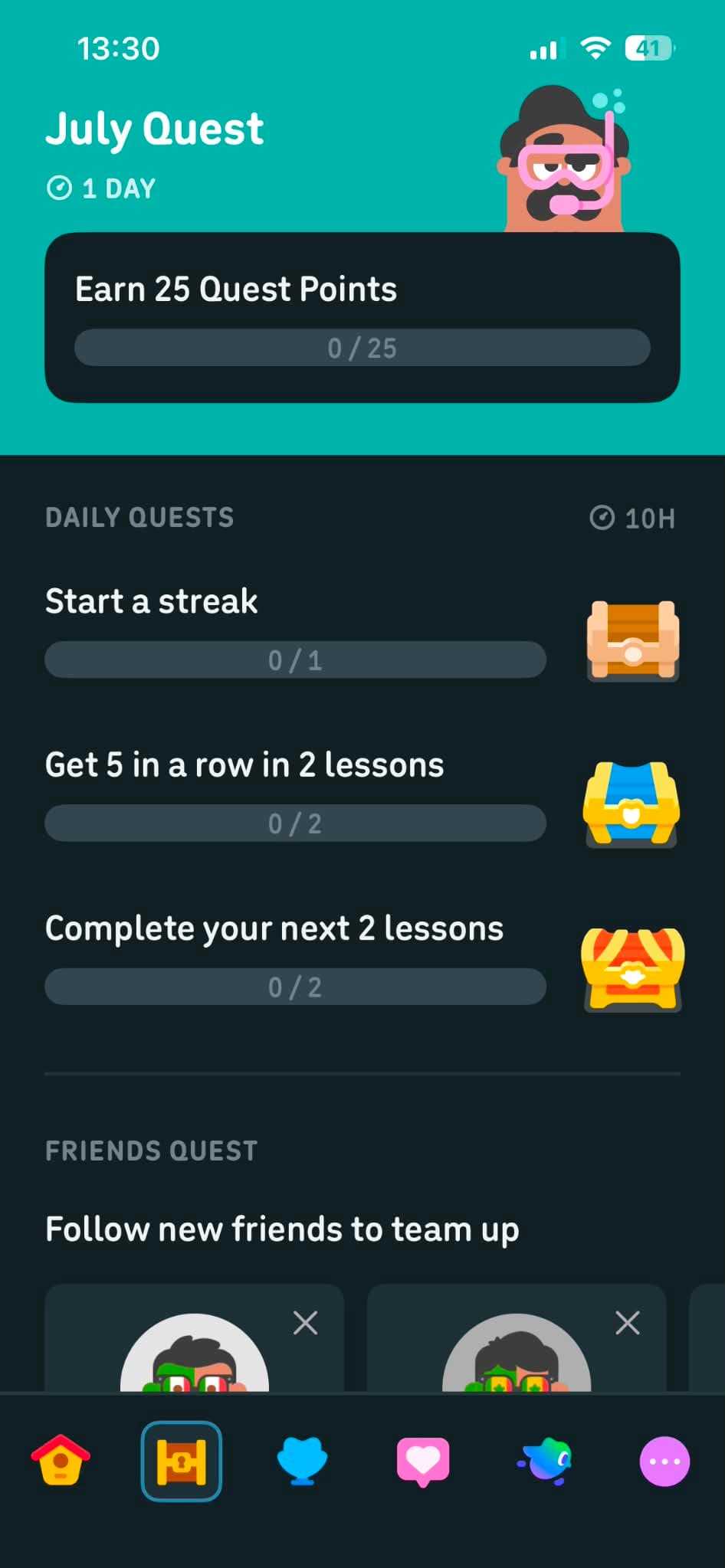
Quests like these are clever. They're small, they're achievable in a few minutes, and completing one feels properly satisfying. That's exactly why I'd be careful with them. The reward loop is well designed enough that it's easy to confuse "I did my quests today" with "I learned Spanish today." Those are not always the same thing.
Why I'd skip the leaderboard entirely
Here's my honest advice, and I mean this one seriously: don't turn the leaderboard on, especially if you know you're a competitive person. I am, and it got ugly fast. You stop doing lessons because you want to learn Spanish and start doing them because some stranger called "linguaqueen92" is one rank above you and that feels, for reasons I cannot fully defend, unacceptable. That's not language learning anymore, that's just a different kind of scrolling, and it burns people out fast. Turn it off. Your Spanish will not suffer for it.
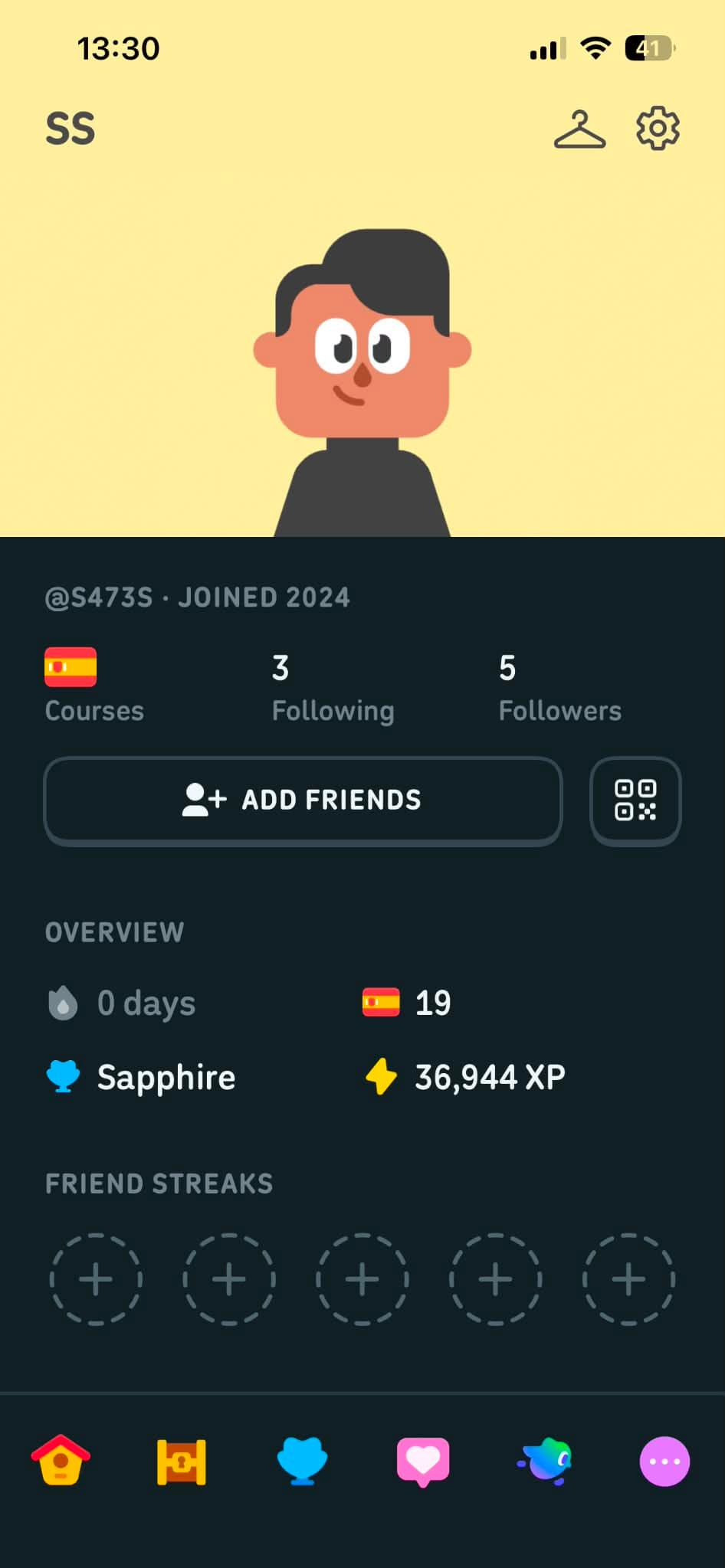
This is my real profile, streak and all. Yes, it says zero. No, I'm not embarrassed about it anymore, I turned the streak pressure off on purpose once I noticed it was making me open the app out of guilt rather than curiosity. The XP total tells a more honest story than the streak ever did.
What Duolingo gets right
If you are just starting off on Spanish, or any language really, use Duolingo. I mean that without hesitation. Use it one hundred percent of the way, every day if you can manage it. It removes the hardest part of starting anything, which is deciding what to do today, and it replaces that decision with a clear, short, low-friction lesson that's already been planned for you. For absolute beginners, that alone is worth a lot.
It also does a solid job of building vocabulary quietly, in the background, through repetition rather than rote memorization. And it's forgiving. You can mess up an exercise five times and nobody judges you, which matters more than people admit when you're a nervous beginner.
What Duolingo doesn't teach you
For as good as the app is at building vocabulary, it's surprisingly thin on explaining Spanish grammar. You pick up patterns by exposure, which works, slowly, but you rarely get a proper explanation of why a sentence is built the way it is. When something doesn't click, you're mostly left to guess or go look it up somewhere else.
The grammar notes are too thin
There are little grammar tips tucked into some lessons, but they're short, and on mobile they're easy to miss entirely if you're rushing through to keep a streak alive. Compare that to a proper grammar book or a good teacher who'll walk you through why "ser" and "estar" aren't interchangeable, and Duolingo starts looking pretty light by comparison.
It won't prepare you for real speed Spanish
The listening exercises are spoken slowly and clearly, on purpose, because that's the right pace for a beginner. But real Spanish, the kind spoken by real people on the street in Madrid or Mexico City, comes fast, and it comes full of slang, regional accents, and words getting swallowed together. The first time I tried to follow a conversation between two native speakers who weren't slowing down for me, I understood maybe a third of it, despite feeling confident inside the app. That gap is real, and Duolingo alone won't close it.
Where it starts to fall apart
My honest advice, based on my own hours in the app: don't use Duolingo past roughly fifty hours invested. Past that point, it's diminishing returns, and I mean that plainly, not as a vague warning. The lessons start repeating patterns you've already internalized, the new vocabulary slows to a trickle, and you can feel yourself doing the motions rather than learning anything new.
That doesn't mean quit Duolingo entirely once you hit that point. I still use it. I just use it a lot less, no more than ten minutes a day, as a light maintenance tool rather than my main source of learning. After those first fifty hours, you need to bring in other sources: conversation practice, real media in Spanish, a grammar resource that explains why something works instead of just drilling it into you. Duolingo alone, past that point, will quietly stall your progress while still making you feel productive. That combination is exactly what makes it risky to over-rely on.
How I'd structure your first 50 hours
If I were starting over knowing what I know now, here's roughly how I'd spend that first stretch, since a plan helps more than just winging it lesson by lesson.
The first two weeks: just show up
Don't overthink it. Open the app, do the lessons in order, let the habit form. This part is really just about proving to yourself that you'll stick with it, and Duolingo is the easiest possible way to do that.
Weeks three through eight: add real listening
Once the basics feel familiar, start layering in something Duolingo can't give you: real spoken Spanish, at real speed. A podcast made for learners, a slow news show, a show with Spanish audio and subtitles. Keep doing your Duolingo lessons alongside it, just don't let it be the only Spanish you hear all week.
Quick Spanish warm-up
What does "la maleta" mean?
Question 1 of 5
What Duolingo costs
Before getting into whether any of this is worth paying for, here's what you're choosing between. Prices shift occasionally, so treat these as ballpark figures rather than gospel, but this is roughly where things stand.
Free Tier
$0/month
Full course access, with ads and daily energy or heart limits.
Super Duolingo (Individual)
~$12.99/mo or ~$84-96/yr
Removes ads, adds offline access, and gives unlimited mistakes.
Super Duolingo (Family Plan)
~$119.99/year
Covers up to 6 users, making it the best value per person if you're sharing.
Duolingo Max (AI-powered)
~$29.99/mo or ~$168/yr
Adds AI roleplay conversation features for select courses.
| Plan | Price | What you get |
|---|---|---|
| Free Tier | $0/month | Full course access, with ads and daily energy or heart limits. |
| Super Duolingo (Individual) | ~$12.99/mo or ~$84-96/yr | Removes ads, adds offline access, and gives unlimited mistakes. |
| Super Duolingo (Family Plan) | ~$119.99/year | Covers up to 6 users, making it the best value per person if you're sharing. |
| Duolingo Max (AI-powered) | ~$29.99/mo or ~$168/yr | Adds AI roleplay conversation features for select courses. |
Should you pay for Duolingo Super?
No. I don't care how much money you have, and I say that as someone who isn't against paying for good tools. Super gets you unlimited energy, no ads, and a few other conveniences, but none of it makes the core teaching any better. You're not paying for more learning, you're paying to remove friction from a habit loop, and that's just not what this particular chunk of your budget should go toward. Keep the free version, put up with the occasional ad, and spend that money on something that moves your Spanish forward, like a tutor, a book, or a trip.
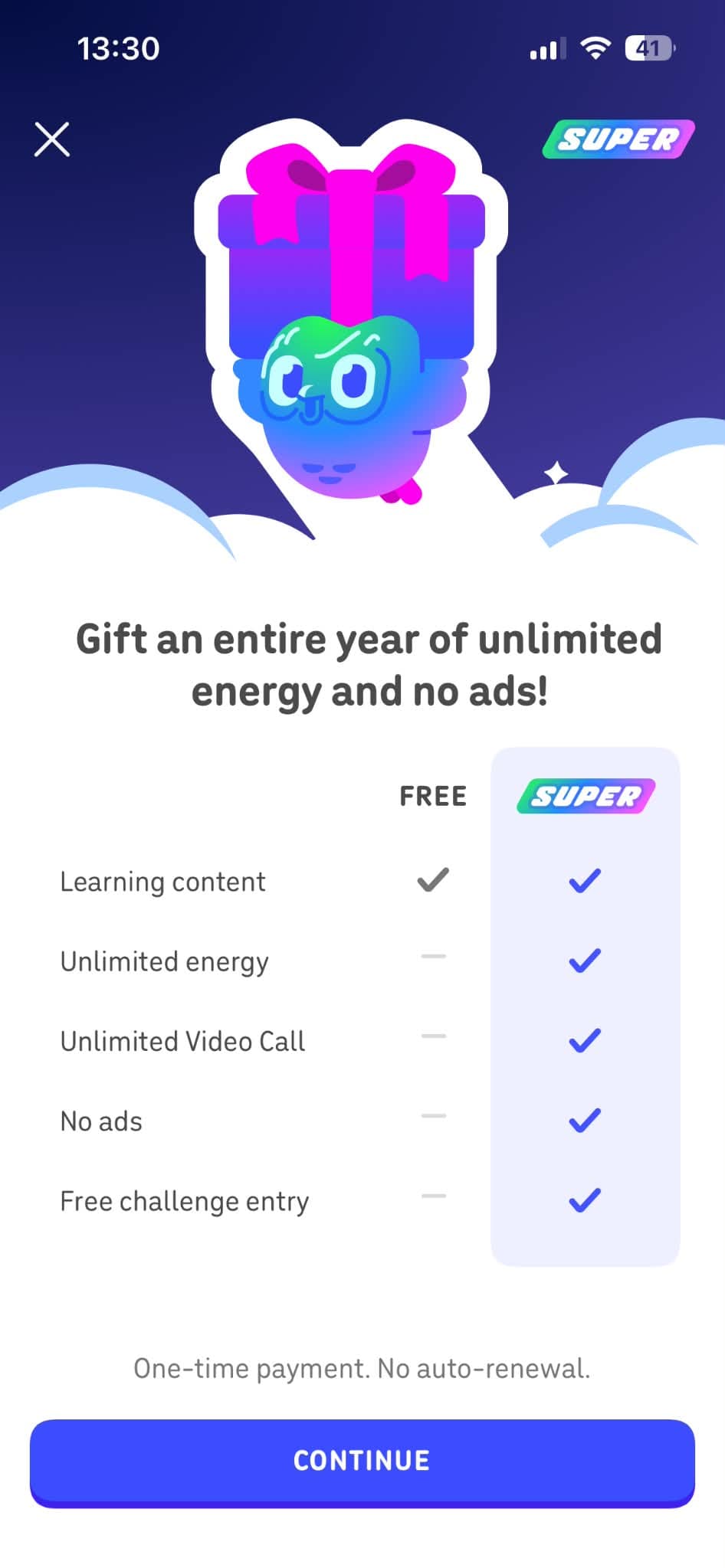
It's a well designed pitch, I'll give them that. But look closely at what's really being sold: energy, ads, and challenge entries. Not better lessons, not deeper grammar explanations, not more conversation practice. That's the whole reason my answer stays no.
My rating and final verdict
4/5
Excellent starter, weak long-term solution on its own
Four out of five. Duolingo earns every bit of that as a way to start learning Spanish, and loses a point for how much worse it gets the longer you stick with it as your only tool. Use it heavily at the start, be honest with yourself once you cross that fifty hour mark, skip the leaderboard, and never, ever pay for Premium. Do those four things and you'll get exactly what this app is good for, without getting stuck in the parts where it isn't.
Curious whether all those hours actually added up to something? I put together a quick A1 Spanish quiz that tells you plainly whether you've got the basics down or still have gaps to close.
A quick note: this is one person's experience, and language learning speed and results vary a lot from person to person. Read this as my honest opinion, not a promise of what will happen for you. More on that in the disclaimer.
Sources
- Duolingo, official website
- Duolingo Efficacy Studies, Duolingo Inc.
- Screenshots and score, streak, and XP figures are from my own Duolingo account, taken July 2026.