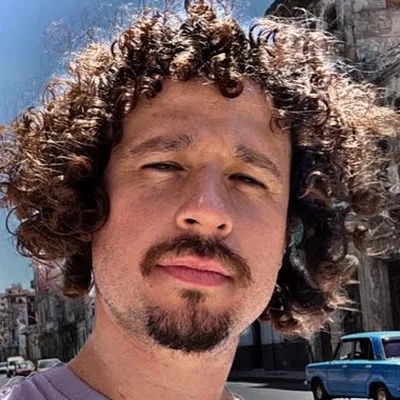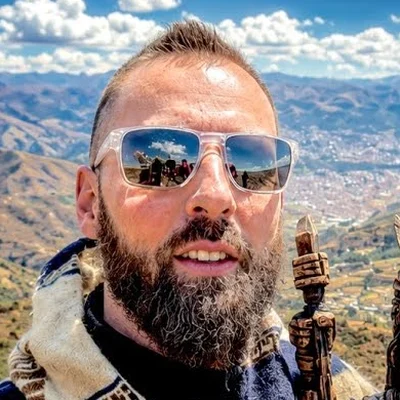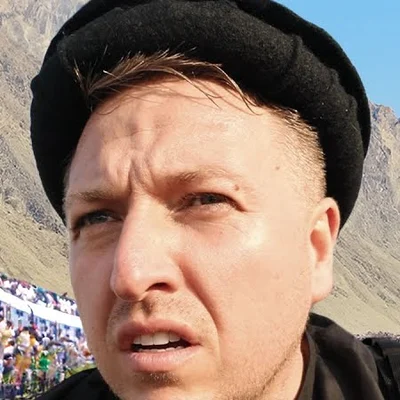
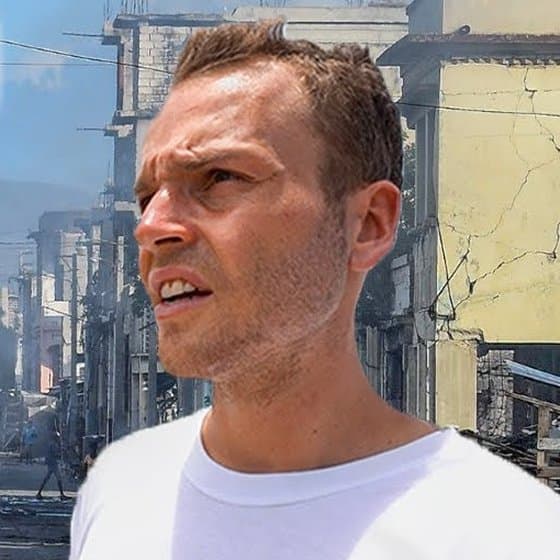




Who Is Indigo Traveller?
Indigo Traveller is the YouTube name of Nick Fisher, a New Zealander who spent his early childhood in Scotland and has lived in Budapest for years. Since 2016 he has gone to the places your mum made you promise to skip: North Korea, Somalia, South Sudan, Afghanistan, Yemen, Venezuela, Haiti. He walks the streets with a local guide, asks people what they earn and what they pay for rice, and lets them talk. Then he edits it all himself, because, as he said in 2021, he likes to control the editing.
His titles read like a hostage negotiator's diary. “Caught in Shooting in Haiti's Biggest Slum.” “Threatened by Bandits in Haiti.” “Walking Streets of Honduras Capital City (extremely dangerous).” Every country on his channel is the most dangerous, the roughest or the biggest something. If he reviewed a garden centre it would be “Inside Europe's Most Dangerous Garden Centre (beyond words)”, and you would click.
The man is the opposite of his titles. He's polite, calm and a bit quiet, and he calls himself “a normal guy” who just happens to go to these places. He looks like a geography teacher who got lost on a school trip and decided to keep going for ten years. When soldiers in Haiti pointed rifles at him, he didn't argue. He made peace with the idea of a Haitian prison, in his own words, and waited for his fixer to talk them down. I once made peace with a parking fine. It took me a fortnight and three strongly worded drafts I never sent.
And he ends almost every video the same way: “In case I don't see you, good afternoon, good evening and good night.” That's Jim Carrey's line from The Truman Show, the film about a man who has no idea millions of people are watching him. Nick knows exactly how many people are watching. He goes to Cité Soleil anyway.
What Is Indigo Traveller's Real Name?
Nick Fisher. It isn't a secret. He introduced himself as Nick in one of his first videos, the New Zealand papers have used his full name since at least 2019, and even his Wikipedia page, a short stub, calls the channel “the brand of” Nick Fisher. A brand. Most people get a brand when they open a café.
When a fan asked where the name came from, he said he came across the idea of an “indigo state of mind” in a video and told everyone to look indigo up in Urban Dictionary. Sending your audience to Urban Dictionary to understand your name is a brave move. That website is where perfectly innocent words go to get a criminal record.
Where Is Indigo Traveller From?
New Zealand, with a Scottish start. On The New Travel Podcast he explained that he spent the first nine years of his life in Scotland, that his mum is a New Zealander and his dad is English, and that he moved to New Zealand at nine, which is why he doesn't sound Scottish. He grew up, as he put it, in the mountains riding bikes. The New Zealand Herald calls him a Wanaka man, Wanaka being a lake town in the Southern Alps where the most dangerous thing on the road is a tourist reversing a campervan.
The host brought up the famous internet joke about world maps that forget New Zealand, and Nick saw the bright side. Maybe it's a good thing, he said, because then New Zealand isn't going to war with so many countries. He's the only man alive who got left off the map and called it a peace treaty.
Travel runs in the family. The Fishers took the classic British holidays to France and Spain while they lived in Scotland, and his dad still travels a lot. In 2016 the two of them crossed paths in Singapore and hung out for a day. Most families meet up at Christmas. The Fishers meet up at a layover.
Home these days is Hungary. RNZ reported in 2020 that he had been based there for a few years, and in 2022 he talked to them from Budapest. When Covid turned serious in early 2020 he was in Pakistan, and he flew home to Hungary on his dad's advice. “Sometimes you got to listen to your parents,” he said, which might be the most dangerous sentence ever spoken on his channel.
What Did Nick Fisher Do Before YouTube?
He grew plants. In his first Q&A he explained that he never went to college. He did an apprenticeship in horticulture, “which is plants”, and that job paid for his first trips. The Shorty Awards later listed him as an ex-horticultural apprentice, which is the gentlest job title in the history of extreme travel. One day you're repotting geraniums. A few years later you're riding three to a motorbike through a flooded gang neighbourhood. Nobody told the geraniums.
After that he was a tour guide, a cave tour guide and a barista. His first video starts in Kaikōura on New Zealand's east coast, where he had been working as a tour guide, with a dog called Jasper. He tells Jasper they're going to have a lot of fun together, then corrects himself. Jasper has to stay behind. He's got “dog business”. Jasper is the only character in this story who said no to Asia.
By then he had been travelling on and off for about two years. He finished studying at 21 or 22, did the classic Bangkok and Khao San Road trip, then Southeast Asia and Eastern Europe, flew home to earn more and left again. Eventually he got tired of the work, travel, work, travel loop and wondered how to make it one thing. You know where this is going. There was a camera in the shop.
What Happened to Indigo Traveller in the Nepal Earthquake?
He was in it, and it's the reason the channel looks the way it does. In April 2015, after trekking to Everest Base Camp, he went to a remote village a long bus ride from Kathmandu to teach English. On 25 April, the day before school was due to start, he was playing cards with his friend when the 7.8 earthquake hit. He ran up the hill with his friend's mother. In a big aftershock about half an hour later, he watched the family's house collapse in front of them. The father had saved for years to build it, and it had no insurance. Nick says the family who had just lost everything kept checking that he was all right.
The school he would have been teaching in the next morning collapsed too, desks and all. Nobody in the village was killed. Back home, his sister was contacting every embassy in the region and posting his photo, asking if anyone had seen him. He climbed out over a mountain the next morning because landslides had cut the roads, and took four buses to Pokhara.
A day or two later he was sitting in a café with an Italian coffee when it hit him how wrong that felt. He raised money from family and friends, filled a duffel bag with rice, lentils, salt, antibiotics, toothbrushes and clothes, and took it back to the village. The bridge was gone, so he crossed the river on a single bamboo pole and slipped halfway, landing half on and half off. On a later minivan ride, the van collided with a motorbike and rolled into a ditch. Then, as he was finally leaving Kathmandu, the 7.3 aftershock hit while he was walking down the main street. Most people get one sign from the universe. Nick got four and read every one of them as “keep going”.
He told Quentin Super in 2021 that the earthquake changed how he saw the news. He watched the coverage from his hotel room and heard facts he knew were wrong, because he had been right there on the ground. That's the whole channel in one sentence. He has been going to see for himself ever since.
How Did Indigo Traveller Start on YouTube?
On a motorbike in Vietnam, in 2016. He flew to Bangkok, then Hanoi, bought a bike and rode the length of the country, filming and editing every single day. He planned a month. It took two, and he had to extend his visa. The videos got between 50 and 200 views each. His early titles read like a gap year group chat: “Stopped by Vietnam Police”, “Crazy Vietnamese Drivers”, and a weed-finding guide we'll politely skip past.
Then India nearly ended it. His laptop died of water damage right as the country's 2016 cash crisis hit, when every ATM had either a six-hour queue or no money in it. He spent weeks stuck in Bangalore trying to buy a new computer with no access to cash. It's the most backpacker problem ever invented. The world's second most populous country runs out of banknotes, and the man's main worry is his render times.
India is also where it took off. Indian viewers found him, and he thanked them for it in a video called “How To Get 1000 YouTube Subscribers (The Hard Way)”. The first thousand took about six months, the next thousand two. By Christmas 2017 he had 50,000 and filmed the thank-you video in a snowy town, where a chunk of ice slid off a roof and landed two centimetres from him. Back in his Airbnb, the phone on the wall kept ringing by itself in the middle of the night, even off the hook. A lesser man would have moved out. Nick put it in the video.
He never deleted the early stuff. On the podcast he admitted the quality was pretty dreadful but said the old videos keep him humble. He also tried daily vlogging for a few months in 2017 and said he “almost died”. Remember that line. This is a man who later stood behind a wall in Haiti while machine guns went off on the other side, and the thing that nearly killed him was uploading every day.
How Did Indigo Traveller Get Famous?
North Korea, in 2018. He found a company in England that ran tours there, and it cost about 1,500 euros for nine days, food included, plus your own flight to Beijing. It was called the budget tour. “I'm not quite sure what that means in North Korea standards,” he said. Getting to Beijing took him three days, a 12-hour layover in Moscow and three hours of sleep on a concrete floor, which is the most budget part of any budget tour.
His first two North Korea videos are still the most watched things he has ever made, and they're gloriously ordinary. He reviews the Air Koryo burger (not appetising, good service). He learns that you can't throw a newspaper away in North Korea, because people qualified to destroy newspapers have to destroy it. He films his evening wrap-up in the hotel bathroom because the light in the bedroom isn't strong enough, there being a bit of a power issue. He goes bowling, the power cuts out, and he still gets a gutter ball. North Korea has nuclear weapons and a cult of personality, and it couldn't stop a Kiwi from bowling badly in the dark.
Every one of those videos opens the same way: “I am NOT a journalist I'm just some kid with a consumer camera.” He also told a podcast that someone inside North Korea watched the video, because the country showed up in his YouTube stats. When he went back to check, the data was gone. Somewhere in Pyongyang a man with special internet watched a New Zealander review his country's burger, and then the evidence disappeared. That's the best review Nick will ever get.
Not everyone loved it. Viewers accused him of putting money in the regime's pocket, so he answered them in a video called “I'm Funding North Korea's Regime (addressing your concerns)”. The title sounds like a confession. It's a Q&A with about twenty questions, and the regime one is in the middle, somewhere between “is there a drinking age” and “do they have smartphones”. His answer: if he only went to countries whose governments he agreed with 100%, he “could not leave my front door”. And if everything he saw was staged, North Korea should go into theatre, because it would be the best play ever pulled off. He never says how much of his tour money ended up with the state, which was the bit people were asking about, but he does say the regime is “not even close” to innocent and that maybe he's been brainwashed. Fair play. Most people who have been brainwashed don't put it in the title.
What Happened to Indigo Traveller in Venezuela?
In 2019 he flew into Caracas from Hungary, through Madrid, and made twelve videos he still calls by far his proudest work. A friend called Diego, a Venezuelan raised in the States, put him in touch with Lenny, a Caracas street photographer who met him at the airport and didn't leave his side for the whole trip. Asked later whether he had armed bodyguards, Nick said no: “Lenny was only armed with his personality which is quite a powerful weapon.”
He also said he felt safer in North Korea than in Venezuela and that he wasn't exaggerating. That's quite a sentence. When North Korea is where you finally relaxed, your sense of danger needs recalibrating, and so does your travel agent.
The country was in free fall. He found a pharmacy that sold only Purina dog food and water. Olive oil cost more than four months of the average salary. One video is called “Banned in Venezuela for Filming in Public”, and the ban turns out to be the National Guard refusing to let his camera into a national park. So he went for lunch, then to a supermarket, then to a skate park. If that's a ban, I'd like to be banned more often.
He left at three in the morning, nervous about the streets in the dark, and said goodbye to Lenny and a friend called José. Without Lenny, he said, he would probably be dead, and he wasn't kidding. In Bogotá the immigration officer played salsa while he stamped Nick's passport and the customs lady was doing a crossword. After Caracas, that must have felt like a spa. As for going back, he said he would wait until the government changed hands, because “I don't think I'm the most popular” there.
How Much Money Did Indigo Traveller Raise for Venezuela?
More than $300,000, from a goal of $5,000. Lenny took him to meet Andres, who had been feeding children in Petare, one of the biggest slums in Latin America, for more than ten years. Nick set up a GoFundMe. In the follow-up video he says $100,000 came in during the first 48 hours and $200,000 within a month, and almost a year later it was about to pass $300,000. Quentin Super reported more than $340,000 in February 2021, and the title of that video now says $425,000 and up.
According to Andres, the money opened six new soup kitchens, and by 2020 his team was feeding more than 3,500 children every weekday in 45 kitchens. One couple who had been cooking for the kids from a house with no bathroom got a new house, which became a soup kitchen. When Nick arrived, feeding a child for a month cost almost $10. That's what a lot of us spend on a sandwich and a coffee we didn't enjoy.
His Q&A about it is called “Spending $200,000.00 in Venezuela”, which is the only clickbait title in history where the truth is better than the bait. And it led somewhere. In one of the Petare videos he mentioned, in passing, that he kept seeing UNICEF backpacks on kids all over the world. A couple of weeks later UNICEF got in touch. That led to a fundraising trip to Afghanistan that the podcast host put at over 200,000, and Nick said yes, that's right. UNICEF later helped with the paperwork for South Sudan too, where he made a point of saying they didn't pay him. Most of us mention a brand in passing and get a discount code. Nick got a humanitarian agency.
What Happened to Indigo Traveller in Haiti?
The most dangerous trip he has made, and his biggest Latin American video. He said he had wanted to go since Venezuela, and he got there in 2022, flying in from Santo Domingo. His fixer was Sean, a Haitian journalist, whose job Nick described as “trying to keep me alive”. They were barely out of the airport when police stopped them and Sean paid a bribe. Welcome to Haiti. Please have your envelope ready.
In Cité Soleil they drove in an armoured car to a gang checkpoint, then rode three to a motorbike through the floodwater. Machine guns went off on the other side of a wall while they stood against it. On the way out they saw a kidnapping, and Nick wouldn't give details because it could put people's lives in danger. Those parts he tells straight, and so will I.
Then there's the part that's on him. He filmed an armoured bulldozer near an army base, and soldiers ran out with AK-47s. He didn't have his passport on him. He leaves it at the hotel on purpose, in case his bag gets stolen. It's a flawless plan, right up until the army asks to see it. Sean talked them down with his press card while Nick, by his own account, made his peace with a Haitian prison. If I'd been there, I would have made my peace with my trousers.
Even the critics rate this series. Chris Tharp, who ranked a dozen travel channels in 2024 and put Indigo Traveller twelfth, still called the Haiti videos an incredible series. When Nick's title says shooting, there was a shooting.
Where Else Has Indigo Traveller Been in Latin America?
Most of it, one rough neighbourhood at a time. In early 2021 he did Brazil and Honduras. In Rio a favela was so tense he couldn't fly the drone, because it would get shot out of the sky. In Tegucigalpa he asked his guide for the neighbourhood “just on the edge a little bit”, the way you'd order a curry. In one market they were told to leave, and he concluded that “the definition of safe in this city is a bit different to my definition of safe”. He has also filmed Jamaica, Chile and Peru, where an early video was titled “Come to Peru Now (It's super cheap!)”, the only travel advice on his channel that wouldn't worry your insurer.
In Buenos Aires he went to Villa 31 with Lenny, who had moved there from Venezuela and greeted him with “finally you came here, man”. The title calls it Argentina's most dangerous neighbourhood. Nick's verdict was that its reputation is far more drastic than the reality on the ground. Then he got so ill he spent almost a week in his hotel room, which is why there's only one Argentina video. Villa 31 couldn't hurt him. A bad stomach took him out in a week.
His newest Latin American runs are Cuba, Peru and Bolivia. The Cuba arrival video is titled “Failed State” and ends with him saying the people are so kind. In Callao, the port next to Lima, he was told that walking into the gang areas needs the gang leaders' permission and isn't worth the risk, so he flew a 360-degree drone over them instead. That's the most polite way anyone has ever visited a gang. And in El Alto, 4,100 metres up, the video promises the most dangerous part of the most dangerous area in all of Bolivia. Nick's verdict: the most threatening thing there was the altitude. A shaman read his future in coca leaves, said he might get sick, looked again and said he would be fine. He didn't need a shaman for that. That's the plot of every video he has ever made.
If you want the Venezuelan side of this story from someone who grew up there, read my profile of Volpe Where Are You, a Caracas boy who now lives in Miami.
Does Indigo Traveller Speak Spanish?
No. Over eight years of trips to Latin America, his Spanish has grown from one word to about four. In the Venezuela videos it's “gracias”. At the Brazilian border a man told him he was from Petare, and Nick shouted “Petare!” like a quiz show contestant who finally knew one. In Honduras he managed “Buenos días from Honduras” and a “mucho gusto”. At that rate he'll be fluent somewhere around 2090.
His peak so far came in El Alto, at 4,100 metres, after a coca drink and a visit to a shaman: “Muy loco, mi señor.” Thin air, coca leaves and a fortune teller. That's how most of us said our first full sentence in Spanish too.
He gets by because he picks the right people. On the podcast he said a good fixer needs reasonable English and should ideally be a funny, charismatic guy. Lenny in Caracas, Sean in Port-au-Prince, Willy in La Paz and an interpreter in Havana do the talking, and he lets them. His language-learning strategy is to hire charisma. Mine was pointing at things on menus and smiling, and the things did not always arrive. If you want the jokes the taco man is telling about you, start with my guide to Mexican slang.
Is Indigo Traveller a Journalist?
He says no, in capital letters, at the start of his most famous video. On the podcast he refused to pick a label and called what he does a hybrid. You get the economy and the conflict, like the news, and the conversations with ordinary people, like a travel vlog. He told Quentin Super he likes to see behind the headlines. He also likes to leave politics to the people who live there. Let the people talk about it, he said, and let the audience decide.
The fair criticism is the titles. In 2024 Chris Tharp wrote that his videos verge on poverty porn and called the titles sensationalistic clickbait, naming “Arriving in Honduras (not safe)” and “Walking Jamaica's Dangerous Streets (urban war zone)”. He has a point. The Argentina title promises “$40 per month rent”, but on camera the rent is quoted in pesos and nobody says forty dollars. “Goodbye YouTube, I'm Disconnecting” is two and a half minutes long and is about slow internet in the next country. And my favourite, “My Biggest Life Regrets”, is a Q&A on a beach in Lebanon where he says he wouldn't change a single thing. The video's biggest regret is its title.
Inside the videos, though, he mostly undersells. He finds the kind people in the “failed state”, the clean street in the roughest neighbourhood and the beach at the end of the gang tour. The titles are for the algorithm. The man is a horticulturalist who wants you to know Iran is lovely.
How Does Indigo Traveller Make Money?
Patreon, YouTube ads and sponsors, in that order at the start. In his first Q&A, titled “How I Make Money”, he said he had saved a lump of money from New Zealand, that YouTube was almost covering him and that his patrons were helping a huge amount. He didn't own a drone because he couldn't afford one. A few months later, from that beach in Lebanon, he said Patreon paid for about half his travels and the rest came from sponsors and ads, and that his trips were paid with his own money. He used to read his patrons' names out one by one at the end of videos, like a school headmaster announcing the house points.
These days the sponsor reads come with the territory: a learning app in Caracas, a VPN in Port-au-Prince, an eSIM in La Paz. He doesn't say what he earns, and the net worth figures online are guesses. I won't add mine. What he did say, back when money was tight, is that if he were richer he'd upgrade from the $2 hostel and take second class on the sleeper train instead of third, but the style wouldn't change. That's the most modest dream I've heard from a man with millions of views. Second class. Steady on, Nick.
Why Do People Like Indigo Traveller?
Because he gets out of the way. He asks the question, then lets the shoe shiner in Tegucigalpa or the soup-kitchen cook in Petare answer it, and he doesn't talk over them. When people are suffering on camera he goes quiet and helps where he can, and he has pointed his audience at hundreds of thousands of dollars for people who needed it more than he needed views. On the podcast, asked for his last words of wisdom, he said “live and let live”. Then he told everyone to subscribe to the podcast.
And because he's a mess in the most likeable way. He packs on the day of the flight. His signature hat came from a beach in Poland and was already weathered when he bought it, so it looked like it had been through Somalia before it had been anywhere. He got so ill in India he ended up in hospital. He told viewers in Lebanon that his history with street dogs “is not good”. A fan once asked him whether he'd rather have an eye pecked out by an eagle or a foot bitten off by a crocodile, and he gave it real thought, then chose the eagle because one foot would make travelling harder. Even in a hypothetical, he's planning the next trip.
If you like this kind of channel, my profiles of Bald and Bankrupt and Harald Baldr cover two more men who walk where the guidebooks don't, and Simon Wilson also took the train into North Korea, with a lot more ketchup.
Sources
37 links
Press and interviews
- NZ Herald on his “surreal” North Korea trip, 25 June 2018
- Stuff, “The Kiwi vlogging North Korea”, July 2018
- NZ Herald on the 27-year-old from Wanaka in Iraqi Kurdistan, 21 May 2019
- Shorty Awards, his nomination in the travel category
- RNZ, “Calling Home: Nick Fisher, Budapest, Hungary”, 4 October 2020
- Quentin Super’s interview on the Nepal earthquake, the Venezuela fundraiser and UNICEF, 11 February 2021
- The New Travel Podcast, episode 12, Dan Vineberg talks to Nick about growing up, North Korea, fixers and Venezuela, 2021
- RNZ Morning Report, “NZ filmmaker documenting impacts of war in Ukraine”, 25 May 2022
- Chris Tharp ranks a dozen travel channels and calls out his titles, 20 February 2024
His videos
New Zealand to Asia, The Start of Something · I Was in a Huge Earthquake in Nepal · How To Get 1000 YouTube Subscribers (The Hard Way) · How I Make Money · 50,000 Subscribers! · My Biggest Life Regrets · I’m Taking a Break from YouTube · Inside North Korea (Surreal Experience) · 1 Day in North Korea (Overwhelming Experience) · I’m Funding North Korea’s Regime (Addressing Your Concerns) · My Coronavirus Story · Day 1: Inside Maduro’s Venezuela · Banned in Venezuela for Filming in Public · Spending $200,000.00 in Venezuela · Venezuela Is Finished, Time to Leave · Escaping From Venezuela to Colombia · Using YouTube to Feed Thousands in Venezuela · Day 1: Walking Streets of South Sudan · Inside Venezuelan Slum at Brazil Border · Inside Brazil’s Most Dangerous Neighborhood · Walking Streets of Honduras Capital City · Day 1: Walking Streets of Haiti · Caught in Shooting in Haiti’s Biggest Slum · Inside Haiti’s Gang Neighborhoods · Inside Argentina’s Most Dangerous Neighborhood · Day 1: Arriving in Cuba in 2025 · Walking into Peru’s Roughest Neighborhood · Walking into Bolivia’s Roughest Neighborhood