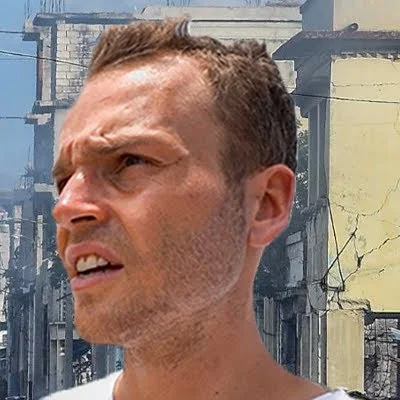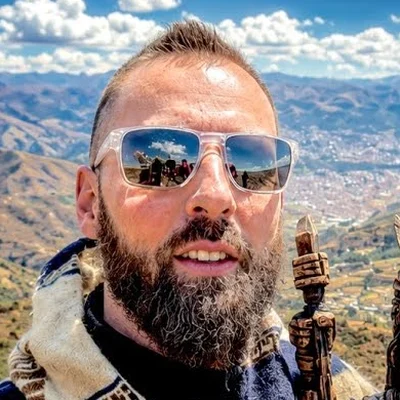





Who Is Luisito Comunica?
Luisito Comunica is Luis Arturo Villar Sudek, a YouTuber from Puebla, Mexico, and the most watched traveller in the Spanish language. He films street food, markets, prisons, slums and palaces on every continent, for an audience that runs from teenagers to their grandmothers. In Mexico whole families sit down together to watch him eat something strange in a country they will never visit. He is the only thing that gets a Mexican family off WhatsApp at the same time.
Every video opens the same way: “Hola amigos, sean bienvenidos a una aventura más.” Then he finds out what something costs, what people earn or how they get drunk, and sums it up with his catchphrase, “vaya dato perturbador”, well, that's a disturbing fact. It's the formula of a good local news reporter, which makes sense, because a reporter is what he trained to be.
What most viewers don't know is that the whole story runs on money, and for a long time on debt. He grew up in a family that lived on credit, got himself banned from YouTube's ad money as a student and only became a businessman because the tax office sent him a bill in the millions. The street food is the show. The money is the plot.
Where Is Luisito Comunica From?
Puebla, about two hours east of Mexico City, the city of mole poblano and a volcano that now and then coats the cars in ash. He was born there on 20 March 1991. His dad is a tailor, like his grandfather before him, and his mum taught English. He has one brother, Fede, three years older.
It looked like a comfortable middle-class home, and it ran on credit. His parents sent both boys to good private schools and paid for them with loans. He only understood it at 11 or 12, in a supermarket, when he watched his dad pay for the week's groceries on a credit card in monthly instalments. Most kids learn about money from their pocket money. He learned it from the card machine at the checkout.
Then his parents moved him to a high school full of rich kids, and that part he tells straight, so I will too. As the boy with no money, he always felt left out. The cool kids had convertibles and the newest phones, and he has said it damaged his confidence and left him a little ashamed of his own life.
So he did what his family did when money ran short: he sold things. His mum had kept the house afloat with side jobs, bottling olives for the neighbours and making chocolate truffles. At 14 he found his own line. An uncle made knock-off Nike socks, and Luis bought them at 12 pesos a pair and sold them to the rich kids at school for 30. The boys who made him feel poor were now walking around in his fake socks, at a 150% markup. That's not revenge. That's a business plan.
Years later, with YouTube money coming in, he paid off all his parents' debts. Then he caught his mum looking at rental listings in Puebla, because the house was nowhere near paid for. He found out what was owed, paid it off quietly and one day told her it was done. They still won't let him buy them anything else, and they only accept a holiday if he books them in economy. After years of paying for the groceries in instalments, they'd rather fly cheap than owe their own son.
What Did Luisito Comunica Do Before YouTube?
He taught at a school for expelled kids. Before that, from about 14, he worked in his dad's tailor shop for 50 pesos a day, and what he loved about it was that he could choose how many days a week to turn up. He has spent the rest of his life building a job with the same deal. YouTube is a tailor's shop where you pick your own days and the customers are half of Latin America.
What he wanted to be was a writer, the next Stephen King. A teacher told him he had too much spark to hide in novels and should try journalism, so he studied communication at the BUAP, Puebla's public university. In the very first class the teacher said that everything communicates, todo comunica, and he thought: Luisito comunica. That makes it the only YouTube name in history that came out of a lecture, from the one student who was listening.
YouTube didn't pay yet, so he needed a job. A woman who had once been his own teacher hired him as a substitute English teacher at a school where expelled kids were sent. The wages arrived three or four months late, so the other teachers kept quitting and he kept picking up their subjects. By the end he taught English, civics, geography, history, Spanish, computing and a theatre workshop. The students called him “el Jesús” behind his back, for the long hair and the beard, and thought he didn't know. He knew. A school where the teachers leave faster than the pupils get expelled isn't a school. It's a hostage situation with a timetable.
How Did Luisito Comunica Start on YouTube?
With piano lessons nobody watched. In 2009, his first year at university, he started a channel called Piano Para Gente Cool, piano for cool people. Its one hit was a cover of David Guetta's “Memories”. The rest got about 100 views each, so he deleted a few out of embarrassment and then forgot the password. The channel is still out there. He can't play the piano any more, and he can't delete the proof that he once could.
Then he found out that YouTubers in the US were paid for the ads on their videos, and the communication student had to know how it worked. In a university computer room with about 40 machines, he asked his classmates to click the ad on his video, all at once. About 30 clicks landed in one go. YouTube saw a click farm, closed two of his accounts and banned him from AdSense, the programme that pays creators. He says it was his fault. He wanted to see how the money worked, and he did. It stopped.
For years the only way to get paid was through networks. Machinima, the gaming giant, signed him on a deal he remembers as “80 centavos”. Then they called him on video, and while he was thanking them in his best English for the deal, they told him they were letting him go. That's the most Mexican way to be fired: politely, in a second language, halfway through saying thank you. The ban only ended when a YouTube employee called Ale got it lifted. She's now his business partner, which is how you know the ban was the best thing that ever happened to him.
The channel called Luisito Comunica opened in April 2012, with funny interviews in the streets of Puebla and the regulars of the city centre: a barefoot man who recited poems, a man who said he was Italian and wasn't. Before long he was the biggest YouTuber in Puebla, which mostly meant he had run out of Puebla. At about 22 he moved to Mexico City, to a spare room in a flat full of YouTubers and a job editing video at a friend's agency for a few thousand pesos a month. He lasted seven or eight months. When the channel started bringing in about 100,000 pesos a month, he decided YouTube might be a job after all.
The travel came later, and almost by accident. He wanted to travel without missing his upload schedule, so he took the camera along. A 2017 video of him trying street food in China became, for years, the most watched thing he had ever made, and the channel turned into what it is today. Somewhere in Puebla, the teacher who told him to try journalism was right. It just came with chopsticks.
How Famous Is Luisito Comunica?
Very, but only in Spanish. In Mexico grandmothers stop him in the street. Outside the Spanish-speaking world nobody knows who he is, and he likes it: “Puedo ir a Japón y de verdad que no importo,” he told Jordi Wild. I can go to Japan and I don't matter. He has a theory about it, the vicuña effect. On a trip to the Andes he went wild over the first vicuña he saw, filmed it and sent it to his mum. By the tenth one he didn't care. In Mexico City he is the tenth vicuña. Abroad he's the first.
At home it has gone well past normal fame. In 2019, after the governor of Puebla died, his fan club sent a letter to the state congress proposing him as interim governor. He tweeted that he hoped they would vote for him. He was 27, and the job needs you to be 30, which is the only time in history being too young has saved a state. Later that year he celebrated an Instagram milestone in a full quinceañera dress, with a cake and a limo, at the Ángel de la Independencia. It was the second-least serious campaign of his year.
The invitations got stranger from there. In 2022 he was on the cover of Playboy Africa, holding a joint, and said he had been a fan of the magazine since he was a boy, which every man says and only one has said on the cover. In 2023 the World Economic Forum invited him to cover Davos, and later that year he pretended to lose his teeth on an Instagram live, which turned out to be an ad for a Netflix film. Davos and fake teeth in the same year. That's a man nobody can say no to, including himself.
He's also the voice of Sonic in the Latin American Spanish dub of the three Sonic films, and not everyone was thrilled. Fans of the old voice actor started a petition against him that got 26,847 signatures and changed nothing. For the third film he had to match the battle grunts of Shadow, voiced by René García, the Latin American voice of Vegeta, and finished with the worst sore throat of his life, worse than any night of karaoke.
And he can afford to say no. In 2024 MrBeast invited him to a $1-million video with dozens of creators, and he turned it down, because it meant two days of filming and the Spanish speakers who went got about three seconds each on screen: “no voy a otro lado a que me peluseen y me ninguneen.” I'm not going somewhere to get snubbed. Most of us would cross an ocean for three seconds next to MrBeast. He has his own vicuñas.
The price is that buying a Coke in Mexico means 20 photos. So he goes out in a cap, big glasses and a face mask, and keeps his mouth shut, because his voice gives him away. A man who talks for a living has to go silent to buy milk.
What Does Luisito Comunica Eat?
Everything, on camera, but not all of it. His food series stars his alter ego, Luisillo el Gordillo, which is what happens when a man names a show after his own belly. He has eaten bear, moose, horse, a seahorse and a turtle egg he swallowed whole in Costa Rica. The secret is that he doesn't finish. A food video can mean 20 dishes, and the crew eats the rest. He isn't a glutton. He's a very famous taster with a well-fed crew.
For a man who eats for a living, he has a delicate stomach. He can't handle spice and always asks for the mildest salsa at the taquería, which in Mexico is like a Norwegian who can't handle the cold. In the Peruvian Amazon he ate two palm grubs that tasted like coconut and found out, with his throat closing up, that he's allergic to them. Most people find out about an allergy at the doctor's. He found out in a jungle, on camera, a long way from one.
Some countries beat him. On The Wild Project, Jordi Wild made him grade the street food of every country he could remember, and only two got the bottom grade, Greenland and Cambodia. In Cambodia he ended up living on hotel room service, and he refused the bat because he could already see the headline: “Luisito está creando el COVID.” The winner was never in doubt. Mexico came first, and he admitted the bias: “Mi paladar es maicero.” My palate is made of corn.
Has Luisito Comunica Ever Been in Danger?
Many times, but the closest he came to dying was a pear. He was walking in Qatar with a friend, eating one, when a chunk went down the wrong way. Strangers stopped, his friend thumped his back, and he got it out with a finger down his throat. He has filmed in South Sudan, Iraq and Pakistan, and the thing that nearly killed him came out of a fruit bowl.
The place that shook him most was South Sudan. Everyone was armed, children carried rifles and his guides had been child soldiers, and he tells that part seriously. The same trip gave him his favourite story. He went with his girlfriend, and men offered him cows for her: “más de 100 vacas” on his Instagram at the time, 150 by the time he told it on Spanish TV. He said no and left when the haggling started to feel serious. I assume she hears about those cows on every anniversary.
Mostly what happens to him is police. In a lot of countries a man with a camera gets taken to a little office for questions, and his defence is always the same: “Yo nada más estoy hablando del sándwich que venden aquí, no ni siquiera vengo a derrocar el régimen del gobierno.” I'm only talking about the sandwich, I'm not here to overthrow the government. Bangladesh held him at the airport for more than a day in 2017 and sent him to Turkey. In 2021 police in Caracas held him for three or four hours after he drove into Cota 905, a district just taken back from a gang, because he thought it would make a good video. In 2024 metro security in Santo Domingo pulled him off a train for filming without a permit and handcuffed his friends. Each time he admitted he should have checked first. Each time he hadn't.
Venezuela has given him the most stories. On his first trip, in 2017, three men grabbed him from behind, in front and from the side at a street stall and emptied his pockets, in a way he called “bien amistosa”, very friendly. What bothered him was how normal it was for everyone around him. He kept going back, and on a later trip a restaurant filled up with so many fans that he whispered to his girlfriend not to worry, then fainted on purpose until security helped him out. That's not an escape plan. That's a man who has watched too many telenovelas.
The fight he lost was at home. In 2023, walking his dog in a park in Mexico City, he said no to a popsicle seller, and the man got angry and, on Luisito's video, swung at him. The seller denied hitting him. Luisito showed a bump on his head. South Sudan, Cota 905 and the Santo Domingo metro couldn't touch him. A popsicle he didn't even want did.
Is Luisito Comunica Good for Learning Spanish?
Yes, and English-speaking learners found him long before the English press did. On the Dreaming Spanish forum on Reddit, one post sums him up as very clear audio, a Central Mexico accent and more than a thousand videos, and people reply that he was the first native speaker they could follow. It makes sense. An audience that runs from kids to grandmothers keeps his slang light, and a man who once held the attention of a classroom of expelled teenagers can hold yours.
The slang he does use is everyday Mexican: güey, chido, la neta. Abroad he picks up the local words and uses them with total confidence and mixed results. Chileans laughed at how he used theirs. From his Venezuelan girlfriend he took the words but not the accent, and he uses mamón, which in Mexico means stuck-up, to mean cool. If you want to know what güey means before you press play, start with my guide to Mexican slang. His English is good too. His mum taught it for a living, so he never had an excuse.
Does Luisito Comunica Have a Girlfriend?
Yes, Ari Tenorio, the girlfriend from the cows. She's Venezuelan, was already living in Mexico when they met and now has a Mexican passport. They met on Instagram. He sent her fire emojis every day, not the drooling kind, he stresses, and they were friends for a while before they became a couple in 2020. They invest together, she films him and he films her, and he says the best food in the world after Mexico's is Venezuelan, because her mum cooks it. That's not a food review. That's a man protecting his seat at Sunday lunch.
Before Ari he dated the YouTuber Cinthya Velázquez, known as La Chule, from about 2015 to 2019. They split after a show on the Badabun channel read out a chat from a friend's phone that suggested he had cheated. It was an accusation and it was never confirmed. The friend denied it, and Luisito only said that people would believe what they wanted. When she brought it up again in 2024, he asked people to leave Ari out of it and said they met months after the breakup.
What Is Luisito Comunica's Net Worth?
Nobody outside his bank knows. The websites that guess celebrity fortunes say around $20 million, and those same websites will tell you what the moon weighs to the nearest dollar. He has never given a figure, but he has given better answers.
In 2023 David Broncano asked him on La Resistencia how much he had in the bank, a question Broncano asks every guest. Luisito said he doesn't keep much there because he invests, and a lot of it goes on wages. Then: “Trato de mantener una cantidad de 80 mil euros por ahí, por si sucede un secuestrillo.” I try to keep about 80,000 euros around in case of a little kidnapping. “Yo vengo de un país donde secuestran mucho.” Some Mexicans laughed. Others said he had just made the whole country look bad on Spanish TV, which is hard to argue with, since he had.
The wages are real. He says about 30 families depend on him, and that he's the first rich person in his family, which comes with rules. He doesn't lend money, and when an aunt he hasn't seen in six years writes “hey son”, he doesn't open it. He spends on hotels and flights and gave up on Ferraris around the time he could afford one.
The biggest money story he kept to himself until 2026, when he told Jordi Wild. For several years he had a very bad accountant. Then his first tax audit arrived with the tax, the fines and the surcharges: “Mi deuda era millonaria.” The boy who watched his dad pay for groceries in instalments sold things, emptied an investment fund and paid off the tax office over about ten months. Then he opened a small case against them over another charge, and lost. He still pays close to half his income in tax, has looked into Dubai and isn't going: “Sí estoy dispuesto a pagar la mitad de mi dinero con tal de vivir en México.” That's the most romantic thing anyone has ever said about a tax return.
He says that debt is why he became a businessman. Rebuilding with YouTube alone would take too long, so he went looking for companies that could earn money while he slept.
What Businesses Does Luisito Comunica Own?
A phone company, a drink, restaurants and some burgers he'd rather not talk about. The phone company came first, in 2020: PilloFon, which rents space on a shared Mexican network. His fans are his pillos, rascals, so the network name on your screen says “Pillo”. In the launch video he called that his favourite part, your phone reminding you all day what you are. The plans were called chido and perro, which is like a bank calling its accounts cool and sick. It reached Colombia in 2024, where the company running it failed to pay the network in early 2025 and left the country. In Mexico, no closure has been reported.
The drink is Gran Malo, launched in 2021 with Casa Lumbre, the spirits company behind it. It's a spicy tamarind tequila liqueur at 30%, so not a tequila by law, which he says himself. Remember the man who asks for the mildest salsa? He built a business on a spicy drink. That's a vegetarian opening a steakhouse, and the steakhouse doing fine.
The restaurants started in late 2020, when he bought part of Deigo, a Japanese restaurant in Mexico City that opened in 1995, and then launched Deigo Ramen. He's learning Japanese to go with it and puts himself at about 30% of the language, which is more than most people with a ramen shop. In 2022 he told Forbes, “me involucro en la parte operativa del negocio”, I get involved in the running of the business. Keep that sentence in mind.
The burgers were Fasfú, a delivery-only chain he opened in 2021 in Mexico, Colombia and Peru, then Chile and Madrid. It reached nine countries in a month, lost control of the quality, and the bun came in a different colour in Peru than in Mexico. He compares it to MrBeast's burgers: “es el mismo caso pero unos cuantos millones de dólares menos.” The chain went from hundreds of kitchens to a few dozen and is on “una pequeña pausa”. In business, a little pause is what a breakup calls itself in the first week.
What Are Luisito Comunica's Controversies?
Plenty, because a man who films in 80 countries, says what he thinks and posted three videos a week for years was always going to step on something. Here are the big ones, with what he said back. Where something is only an accusation, I say so, along with what was and wasn't checked.
The drinking clip and the mezcal bottle, 2020. In 2020 an older clip resurfaced in which, pouring shots for his girlfriend at the time, he joked that his plan was to get her drunk and take advantage of her. He never addressed it. That August he posted a photo with a mezcal bottle whose label read “Tus nalguitas serán mías”, your little bum will be mine, and was accused of machismo. He apologised the next day: “Reconozco que mi fotografía de ayer fue inapropiada.”
Africa, 2021. Photos from Nairobi with local people, children among them, and the cows joke about his girlfriend led to accusations, online and from activists, that he treated people as exotic props, and of racism. I found no reply from him.
Bukele and the prison, 2021 and 2024. In March 2021 he interviewed El Salvador's president Nayib Bukele for his podcast, the day before an election, and critics called it propaganda. In 2024 he filmed inside CECOT, Bukele's mega-prison, and was criticised for treating every prisoner as guilty. He says he only described what he saw, denies being paid and accepts that reports of innocent people being locked up can't be denied.
The airport, 2023. When he reviewed Mexico's new Felipe Ángeles airport, people accused him of being paid by the government. He said, “No, no me pagaron. Ninguna necesidad tengo yo de recibir dinero del gobierno.” No evidence of a payment ever came out.
Cuba, 2025. After a street food video in Cuba, Cubans wrote that most people there can't afford the dishes he ate. He answered in the comments: “De corazón, quiero pedir una disculpa por haber sido tan insensible al respecto.”
Gentrification, July 2025. He turned up at a march against gentrification in Mexico City, and protesters recognised him and shouted that he was part of the problem. He told them he is Mexican and left with two police officers. He then called the looting of a shop a robbery disguised as a protest, and was criticised again. Two weeks later he apologised: “Quiero disculparme, porque en mi primera cobertura, le di más enfoque a las cosas negativas.” He skipped the second march and said, “yo no soy el más querido en esa comunidad y tienen toda la razón.”
The restaurants, June 2026. People who said they work or worked at his Deigo restaurants posted that staff were told there would be no profit-sharing that year, which Mexican law requires when a company makes a profit, and others complained about low wages. These are accusations. No authority has confirmed them, and I haven't seen the companies' accounts. In a video he confirmed staff were told there would be no profit-sharing, because “este año no hubo utilidades ni ganancias”, this year there was no profit. He said the restaurants are paying off loans and opening new branches, the partners offered 2,000 pesos per worker, which he called “súper poquito”, and he added 400,000 pesos of his own money to share out. He described himself as an investor and promoter, not the man running them. In 2022 he told Forbes he got involved in the running of the business. Both sentences are his. Pick one.
China, October 2026. On The Wild Project he said China doesn't want to adapt to the outside world, because foreigners can barely pay with cash or foreign cards: “China no quiere adaptarse al mundo de afuera.” Critics answered that China's phone payments are ahead of the West, not behind it. In fairness, in the same breath he told viewers to set up the apps before they go. Around the same time, on live TV in Phoenix, a presenter asked him for something his fans don't know. He said, “Yo nací mujer,” I was born a woman. She didn't laugh, and told him it was a serious subject. He said it wasn't true and that he had thought she would laugh. Some jokes don't cross the border. That one didn't even cross the desk.
Is Luisito Comunica Religious?
No. He went to a Jesuit school and on mission trips as a teenager, and today he says he isn't religious and doesn't know what to believe. What he does instead is stranger and nicer. For a few years now he has thanked the sun out loud, “el señor Sol”, sometimes looking straight at it and sometimes crying. Jordi Wild asked about his retinas. He said they were already ruined.
He did it every day in 2025, when herniated discs put him in hospital for back surgery and he posted on Instagram that he was sad. Jordi Sabaté, a Spanish activist who lives with ALS, wrote to him and talked him through it. Luisito says he made a mountain out of a molehill, and that he owed Sabaté a hug and was going to give it to him in Barcelona the next day. He ended his three hours with Jordi Wild by thanking the sun. He has been to some 80 countries, eaten bear and been offered cows for his girlfriend, and what still amazes him is that the sun comes up.
Sources
57 links
Press
- Milenio on his family tree, the tailor's shop and the Czech grandfather, 9 July 2025
- Depor on the jobs he had before YouTube, 24 May 2021
- Infobae on how the channel started, 4 March 2023
- El Heraldo (Colombia) on his video opener and the man copying it, 28 September 2021
- La Razón on the fan club that put him forward as governor of Puebla, 10 January 2019
- LOS40 on the quinceañera dress, 18 October 2019
- Publimetro on the Playboy Africa cover, 5 January 2022
- Chilango on the fake teeth for Netflix, 8 December 2023
- World Economic Forum on the YouTubers it invited to Davos, January 2023
- LevelUp on his casting as the Latin American voice of Sonic, 30 April 2019
- El Financiero on why he turned down MrBeast, 4 October 2024
- LOS40 on being held in Bangladesh and sent to Turkey, 30 November 2017
- Pulzo on the 2017 robbery in Caracas
- El Diario on his hours with the police in Cota 905, 3 October 2021
- adn40 on his account of the Santo Domingo metro arrest, 27 September 2024
- Uno TV on the popsicle seller, 13 September 2023
- Uno TV on his back operation, 25 February 2025
- Vanguardia (Colombia) on his reply to his ex, 7 February 2024
- RPP on the 2019 cheating claim and his answer, 17 July 2019
- Milenio on the money question on La Resistencia, 17 October 2023
- Milenio on the tax debt and the bad accountant, 25 September 2026
- Rest of World on PilloFon, 27 September 2021
- Portafolio on PilloFon leaving Colombia, 17 February 2025
- Forbes Argentina on his first businesses, 26 January 2022
- Emprendedor on Gran Malo in OXXO and its 30% alcohol
- Pulzo on what went wrong with the burgers, 16 October 2024
- Milenio on Rey Palomo going quiet, 25 October 2024
- El Universal on the old drinking clip and the mezcal photo, 1 September 2020
- Misiones Online on his mezcal apology, 1 September 2020
- Vanguardia (Mexico) on the Kenya photos, 13 February 2021
- El Heraldo (Honduras) on the Bukele interview, March 2021
- Publimetro on the CECOT video, 9 February 2024
- El Financiero on the airport video and the payment claims, 19 February 2023
- LOS40 on the Cuba apology, 26 May 2025
- N+ on the anti-gentrification march, July 2025
- Infobae on his gentrification apology, 21 July 2025
- N+ on the profit-sharing accusations, 8 June 2026
- El Financiero on his answer, 13 June 2026
- Excélsior on the 400,000 pesos, June 2026
- El Imparcial on the China comments, 20 October 2026
- El Imparcial on “Yo nací mujer”, 11 October 2026
- r/dreamingspanish on learning Spanish with his videos
Interviews
The Wild Project #384, with Jordi Wild · Roca Project #108, El precio de la fama · La Entrevista con Yordi Rosado · Cara a Cara con Rodner Figueroa · Marcas Que Impactan: Gran Malo · La Resistencia, with David Broncano · Noticias Telemundo, pasado y presente · Gastro SER · Y100.7 Miami · Así es Luisito Comunica fuera de las redes · Caja negra: me encantaría ir al espacio · Cinemex, on voicing Sonic 3