



Who Is Joe HaTTab?
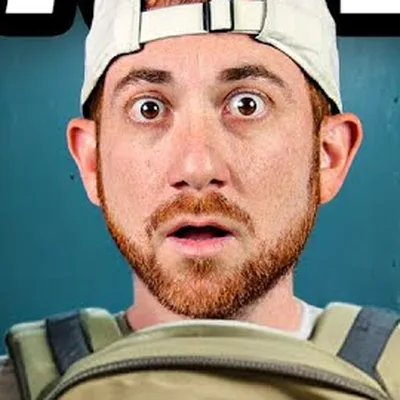
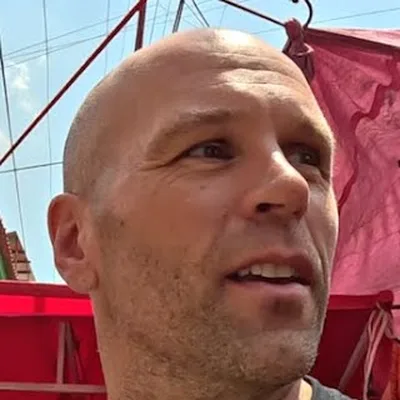
Joe HaTTab is Jehad Hattab, a Jordanian travel YouTuber who was born in Jordan, grew up in Saudi Arabia and lives in the United Arab Emirates. He narrates his documentaries in Arabic, and the videos are dubbed into other languages. That's how a man talking Jordanian Arabic ends up with viewers in Indonesia, Mexico and Russia, by his own count.
He goes wherever the title can say “the world's most”: the most dangerous city, the most remote island, the coldest place on Earth. He has toured prisons in El Salvador, the Philippines and Syria, eaten a live grub in the Peruvian Amazon, spent twelve hours in Antarctica and played the groom in a wedding procession an Omani family staged just for him.
The trouble with “the world's most” is that the world only has one of each. Joe has crowned three places the coldest on Earth (Yakutsk, Antarctica and a fishing town in Greenland), three islands the most remote (Saint Helena, Tuvalu and Kiribati) and three cities the most dangerous (Port-au-Prince, Caracas and Tijuana). In his Brazil video the Amazon is the longest river in the world. In his Peru video it comes second, after the Nile. It's a dog show where every dog wins Best in Show and the judge cries every time.
I'm in no position to judge. I have called four different sandwiches the best sandwich of my life, and two of them came from a petrol station.
What Is Joe HaTTab's Real Name?
Jehad Hattab. Joe is the version English speakers can say without asking twice. He introduces himself as “Jehad Hattab, from Jordan” in his very first video, and when he went back to Kabul a Taliban guide greeted him by the same name and welcomed him for the second time.
In Somaliland his hosts gave him a new surname, Warsame, which they told him is a very popular name there. Joe said he thought he had Somali roots, and in the same breath asked for more ketchup for his banana pasta. That's the fastest anyone has ever gone from finding their roots to finding the condiments.
Where Is Joe HaTTab From?
Jordan. He was born there in 1990, grew up in Saudi Arabia, and these days flies out of the UAE. When he needs a yardstick, he reaches for Jordan. At the foot of Everest he told his Sherpa guide that Jordan has the lowest point in the world (the Dead Sea) and this was the highest. In Barcelona the Sagrada Família, under construction since 1882, reminded him of two buildings back in Jordan that had been on hold for more than ten years. Only Joe could stand in front of Gaudí's masterpiece and think of a stalled building site at home. When I stood there, I mostly thought about the queue for the toilet.
In Peru he priced fruit in Emirati dirhams and Saudi riyals, so the Gulf is where his wallet lives. Esquire Middle East reported in 2021 that he spent up to 200 days a year on the road, and that year he got a second passport, from St Kitts and Nevis, a Caribbean island nation best known for selling citizenship to investors. He tweeted that it gets him into 156 countries. Most of us collect fridge magnets. Joe collects passports.
What Did Joe HaTTab Do Before YouTube?
He had a day job, and in 2016 he quit it to travel and film full time. He has called it the first big risk he took. The channel had existed since 2012 with almost nothing on it, like the treadmill in my spare room. Then the uploads started.
His first video is about his fear of public speaking. He spent a week training as a TV presenter, and the best part is a blooper where he reads out a news bulletin and freezes halfway: “Our congratulations to all UAE citizens on on WHAT!!!” Every news anchor in the world has had that nightmare. Joe uploaded his as video number one. The second video is called “I quit my job to start from zero”, and the ones after it follow a trip around Asia with no ticket home: Kuala Lumpur, Eid in Malaysia, swimming with whale sharks in the Philippines.
The early years were vlogs in Arabic with a lot of challenges. After a spicy noodle duel in Seoul that did not go his way, he announced he was stopping challenges on the channel. Years later the hottest chilli in the world, Pepper X, left him saying he felt like he was dying, and he told the man who bred it, “This is the last episode. I swear.” The breeder asked if he was ready for a hotter one, Pepper Y. Joe has been quitting challenges longer than my uncle has been quitting smoking, and with the same success.
Why Is Every Video “The World's Most” Something?
Because that's what people click, and the video inside is often smaller than the title. His Bolivia video is called “The Day I Almost Died”. Before setting off down the Death Road he asked viewers to remember him if anything happened and suggested renaming it “the life road”. It was his first time on a mountain bike. Here is the near-death experience, in full, in his words: “My bicycle has slipped right here, fortunately, I was able to take control of the situation.” By that standard I almost die every January on my own front steps.
The “Shocking Chinese AI Robot” in another title is a woman pretending to be a robot, and before the reveal Joe declared, “The era of humanity is over.” The Sherpa video is called “Everest Without Oxygen”, which describes the Sherpas. Joe took a five-minute helicopter ride to Namche Bazaar. When his guide offered to train him for two years and take him up Everest if the video got a million likes, Joe answered, “It's not going to reach 1 million.” That's the most realistic forecast ever made on a travel channel.
He does sometimes puncture his own hype. His voodoo video in Benin opens with a promise of children buried, burned and brought back to life, and then Joe spends the ceremony debunking it: “They're tricking us, I saw his foot.” And in Antarctica he was offered seven days or twelve hours, and picked twelve hours because seven days meant no internet. He flew to the most remote continent on Earth and the deal breaker was the Wi-Fi. I respect that. I once left a cabin weekend early for the same reason, and the cabin was forty minutes from my flat.
Who Pays for Joe HaTTab's Trips?
Sponsors, his viewers and, now and then, a government that wants to be filmed. The biggest sponsor over the years has been Epidemic Sound, the music library, which he once said sponsors all his trips. In the Tuvalu video he read their ad and then pleaded: “This is our last video with Epidemic Sound, but if you support us by visiting the link, they will definitely renew the contract.” They came back. It's the only ad I've ever seen that was also a hostage negotiation.
The others are a phone maker, a VPN, an eSIM company and Emirates, which flew him to Chile. In Mexico he thanked NordVPN “for the 20th time!” My favourite is from La Rinconada in Peru, a gold-mining town at about 5,100 metres. His oxygen level had dropped to 73 percent, which he called the danger zone, and right there he read an ad for a Kuwaiti fried chicken group selling franchises in Latin America: “Let's see who'll be the first to get this franchise!” Nothing says business opportunity like a man who can't breathe.
Some access he pays for himself. In La Rinconada he paid the police to escort him. In Haiti he said the video cost him a lot, between security and filming permits. To set foot on Migingo, a tiny fishing island in Lake Victoria, he paid $250. The Antarctic flight company invited him, and he told viewers the twelve hours cost $15,000 and thanked them for it. And in 2025, nine years into the channel, he launched his own Arabic course in filmmaking and editing with the filmmaker Mohammed Ihsan, so the man who films the world now also sells you his camera tricks.
Other doors were opened by officials. A cultural office director showed him round Yemen's Hadhramaut, the Colombian army let him into a training base, and in El Salvador the government invited him into its most famous prison.
What Did Joe HaTTab Say About CECOT?
He praised it, and he praised the president who built it. CECOT is the mega prison El Salvador's president Nayib Bukele opened in 2023 for gang members, and Joe's tour of it, posted in February 2025, is the most watched video on his channel. He narrates in Arabic, so the English quotes below come from the channel's own English subtitles.
He was there on an official tour. In his words, the government “invited media outlets to broadcast the scene to the entire world serving as a deterrent to anyone who dares to break the law,” and he added, “I might be the first Arab to receive permission to film inside.” He introduced Bukele to his Arab audience as a man of Palestinian descent. His verdict on the crackdown: “What the president did was bold and brilliant.” He ended the video with, “There is a lot we can learn from this president.”
A second video followed. This time El Salvador's Minister of Justice and Public Security took him through more prisons and the neighbourhoods the gangs used to run, and the trip ended in the presidential palace. Along the way Joe called one “the nicest prison in the world” and said, “We need more prisons like this.” And of the whole system, “Many Latin American countries are trying to replicate this model. So I hope this model spreads.”
The videos don't mention the criticism. In its report on his CECOT video, the Korean paper Seoul Shinmun noted that Amnesty International and other groups say many of the more than 80,000 people detained under El Salvador's state of emergency may be innocent. Media Matters, an American media watchdog on the left, put his video on a list of YouTube tours that it says promote the prison, and quoted his video description: “Thanks to this prison the country of El Salvador is the safest country in the western hemisphere.” In March 2026 a Turkish academic, Mehmet Keskin, analysed five CECOT videos in the journal Akdeniz İletişim, Joe's among them, alongside those of Luisito Comunica and Timmy Karter. His conclusion was that they use what he calls white propaganda: selective information, emotional appeals and an emphasis on authority.
Those are critics' judgments of the framing. I found no evidence that Joe was paid by El Salvador, and no reply from him to the criticism. His own Philippines video makes the best comparison. Filming in an overcrowded prison there, he opens with “forget everything you know about CECOT,” points out that the director is showing him round personally because they want to give a certain image of the prison, and spends time on detainees who have waited eight to twelve years for a trial. That's the right question to ask on any guided prison tour, and he asked it in the Philippines and not in El Salvador. His one joke at CECOT was on himself: “Thankfully, I live far away.”
Why Did Joe HaTTab Delete His Algeria Video?
Because it caused a diplomatic row, by his own account. In 2023 he filmed on the border between Algeria and Morocco and compared the culture on the two sides, which plenty of Algerians took as a political statement. On the Arabic podcast Bidoon Waraq he later said Algeria's ambassador to the UAE phoned him about it, and that he deleted the video about three hours after posting it, partly to protect the Algerians who had talked to him on camera. His apology on Instagram said the video “had deviated from its initial objective” and “had been interpreted politically by some people”. The ambassador's phone call rests on Joe's account. I couldn't find the Algerian side of the story.
What Has Joe HaTTab Filmed in Latin America?
A lot: Venezuela, Argentina, Chile, Bolivia, Peru, Ecuador, Colombia, Cuba, El Salvador and Mexico, plus Spain and Gibraltar. In nearly every Latin American city he finds an Arab. His fixer in Caracas was Lebanese-Venezuelan. In Buenos Aires he learned that Syrian migrants took the mate habit home, and in Santiago he ate in the Palestinian neighbourhood of Patronato, where a cook who had lived in Chile for 50 years still made the dishes of a Palestine he had never been able to visit.
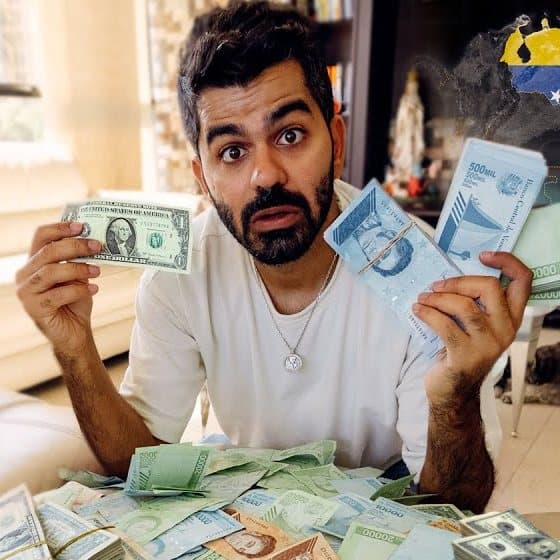
Venezuela is his best Latin America video, mostly because of the money. Cash machines were empty, a $1 bill was worth more than a $10 bill because nobody could give change, and a McDonald's meal cost him 29 million bolívars on his credit card. His review: “I told her you made me broke! It's crazy! 29 million!” He had no idea what it came to in dollars. “My bank will be shocked.” Mine sends a fraud alert when I buy two coffees in one day.
Coca-Cola follows him around the continent like an ex who knows his schedule. In Buenos Aires he learned Boca Juniors made Coca-Cola drop its red at the stadium, and worked out that “if I am wearing red they will kick me out.” Then he went to a town in Chiapas, Mexico, where Coke is part of daily life and of church rituals, to film the diabetes that comes with it, including the funeral of a man in his forties. He had stopped drinking Coke and every other soda five years before the trip. By the end of the video he was drinking it again: “I don't know why because it is very delicious it is an addiction.” Most people go to rehab to quit. Joe went to the one place on Earth where you can relapse while filming a public health documentary.
In Tijuana he opened on a family paying a smuggler to get them through the border fence, then crossed the same border legally “to go to Apple Store, buy a new phone and come back”, and spent the next day eating tacos from breakfast on. In Oaxaca he covered the Day of the Dead and saved the famous mole negro for the last shot. His verdict: “It tastes like chili and hummus.” Every grandmother in Oaxaca just felt a chill. In Cuba, in 2026, he filmed blackouts and bread queues with an English-speaking fixer, and blamed both the American blockade and the government's neighbourhood informants.
Does Joe HaTTab Speak Spanish?
No. Across eleven Spanish-speaking countries, he doesn't say a full sentence of Spanish in any video I went through. He gets by in English with guides and friends, and in Arabic with the Arab families he finds everywhere. The closest he comes is in that Palestinian restaurant in Santiago, where he greets the owner with “Ahlan, hola, how you”. That's three languages in three words, which is more than I managed in my whole first year of Spanish.
His best Spanish moments are Arabic ones. In Lima he told viewers that lúcuma, a fruit, sounds like luqma, Arabic for a bite. Causa, the potato dish, reminded him of kousa, and escabeche, fish pickled in vinegar, he served up as sikbaj, “our traditional dish”. On that last one he's right. Spanish escabeche comes from the Arabic sikbaj, which reached Spain in the days of al-Andalus. So a man who can't order a coffee in Spanish knows where escabeche comes from. That's like failing your driving test and then explaining the history of the wheel to the examiner.
He gets the easy ones right and the medium ones wrong. In Buenos Aires he explained that cambio means exchange, which it does. In Tijuana he told viewers that Baja California means “South California”. Baja means lower. Spain itself shows up as a history lesson more than a place to talk to people. He filmed Barcelona's street grid without interviewing a single Barcelonan, and in his Gibraltar video he called for a new Green March, Morocco's 1975 mass march into Western Sahara, to take Ceuta and Melilla: “tomorrow, we will break through the border inside these two cities.” Then he added, “The strong always take over the land of the weak.”
Joe has said his videos are dubbed into many languages and that he has viewers in Mexico, so there's a fair chance that somewhere in Monterrey a dubbed Joe is touring a prison in fluent Spanish. The real one has never met him. If his trips make you want to understand the people he's filming, start with my guide to Mexican slang and my ranking of the best Spanish apps.
Should You Watch Joe HaTTab?
Yes, for the places. Few channels get to Socotra, Tuvalu, Saint Helena and a packed fishing island in Lake Victoria, and his Arab eye on Latin America is something you won't get from American travel channels: the mosques in Caracas and Buenos Aires, mate in Syria, sikbaj in Lima. He is also good company when things go wrong, like the boat that vanished overnight from Migingo and left him wondering which of three countries it had drifted into.
Just read his titles the way you read a burger menu. The burger is always smaller than the photo. And when a government has opened the door, remember the question he asked in the Philippines and forgot in El Salvador. If you want other takes on the same prison, my profiles of Timmy Karter and Luisito Comunica cover their CECOT videos.
Sources
33 links
Joe narrates in Arabic. Quotes from his videos come from the channel's English subtitles, and from the Arabic captions where a video had no English track.
Press and research
- Esquire Middle East, cover interview, December 2021
- Arabic Post, on his St Kitts and Nevis passport, June 2021 (Arabic)
- Seoul Shinmun, on his CECOT video, February 2025 (Korean)
- Media Matters, on YouTubers' CECOT videos, April 2025
- Mehmet Keskin, “Social Media Propaganda: Content Analysis of YouTube Videos on El Salvador's CECOT Prison”, Akdeniz İletişim no. 51, March 2026
- Yabiladi, on the deleted Algeria video, October 2024
- Bladi, on the deleted Algeria video and his apology, October 2024
His videos
Public Speaking, his first video (Arabic) · I quit my job to start from zero (Arabic) · The Day I Almost Died || The Death Road In Bolivia · I Reached the End of the World… Chile · Inside Venezuela: Life After Economic Disaster · I Visited the Mexican Town Addicted to Coca-Cola · Barcelona: Why This City Is So Unique · This British City Is Trapped Inside Spain · I Tried Peru’s Strangest Foods · At US/Mexico Border: Tijuana to San Diego Border Crossing · Argentina Like You've Never Seen: Beautiful and Dangerous · Inside Mexico’s Day of the Dead · 24hrs in the World’s Highest City · The World’s Biggest and Toughest Prison for Gangs: El Salvador (CECOT) · How El Salvador Destroyed Its Brutal Gangs · The World’s Most Overcrowded Prison · Cuba Is Collapsing: No Power, No Fuel, No Internet · Traveling to the Least Visited Country in the World! Tuvalu · 12 Hours in Antarctica · I Tried the World’s Hottest Pepper · I Spent 7 Days With the Sherpas · Shocking Chinese AI Robot, in the World’s Strangest City · The TRUTH about Most Extreme Rituals in the World: Voodoo · I Entered a Country That Doesn’t Exist on the Map · I Found a City With No Roads, No Cars, Only Water · China SHOCKS America